Morocco’s Broader Industrial Zone Strategy
Beyond individual sites, Morocco’s national industrial zones ecosystem is undergoing a major transformation. The government is not only expanding land and infrastructure but also reshaping the concept of industrial zones to embed sustainability, innovation, and inclusiveness at the core.
This broader vision aligns with Morocco’s Vision 2030 for industrial development — emphasizing not just production volume but environmental performance, competitiveness, and social cohesion.
Latest National Developments
FONZID II — Sustainable Industrial Zone Fund
In 2025, Morocco launched the second phase of the Sustainable Industrial Zones Fund (FONZID II) with nearly 989 million dirhams in investments aimed at creating, expanding, and upgrading industrial zones in a way that prioritizes sustainability.
Key planned and funded activities include:
- New industrial zone creation in Oued Zem,
- Development of sustainable industrial facilities in Taroudant,
- Upgrading zones in Ait Melloul and Ain Chkef,
- Renovation projects in Mohammedia,
- Turning an existing zone in Tanger-Tétouan-Al Hoceima into a “green zone”,
- Establishing a Fertiparc industrial area in Khouribga.
These investments reflect Morocco’s commitment to environmental stewardship and industrial modernisation.
Massive New Land Allocation & Expansion
Government policy has also prioritised enlarging the industrial land base. Morocco has allocated an additional 4,000 hectares for industrial zones, bringing the total to over 13,000 hectares and planning for zones in every province.
This expansion supports equitable industrial access across regions and underscores the scale of Morocco’s industrial ambitions.
National Context: Jobs, Innovation & Clean Growth
These policy initiatives collectively:
- Expand the quality and quantity of industrial land,
- Support sustainable infrastructure (energy, wastewater treatment, resource efficiency),
- Promote employment and skill development,
- Attract foreign and domestic investment into higher-value sectors.
Challenges Across the Industrial Zones Landscape
Despite strong political will and investment, Morocco faces structural challenges:
- FONCIER & Land Mobilization: Securing appropriate land at reasonable cost remains a hurdle, with ongoing efforts to simplify acquisition and prevent speculation.
- Coordination Between Authorities: Aligning urban planning timelines with industrial development projects requires stronger interagency collaboration.
- Public-Private Synergies: Expanding PPPs and engaging private capital effectively can accelerate infrastructure rollout.
These challenges are being addressed through legislative reforms, funding mechanisms, and collaborative frameworks.
Conclusion: A Transforming Industrial Future
Morocco’s industrial zones ecosystem is entering a new phase — one defined by scale, sustainability, strategic diversification, and inclusiveness.
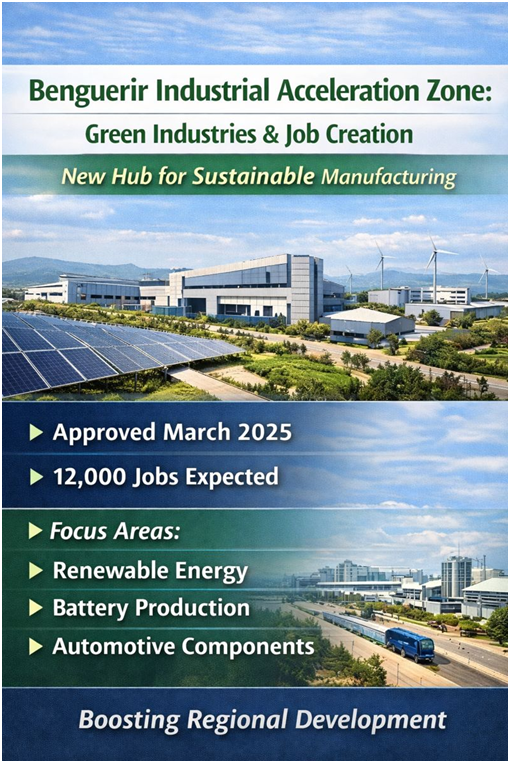
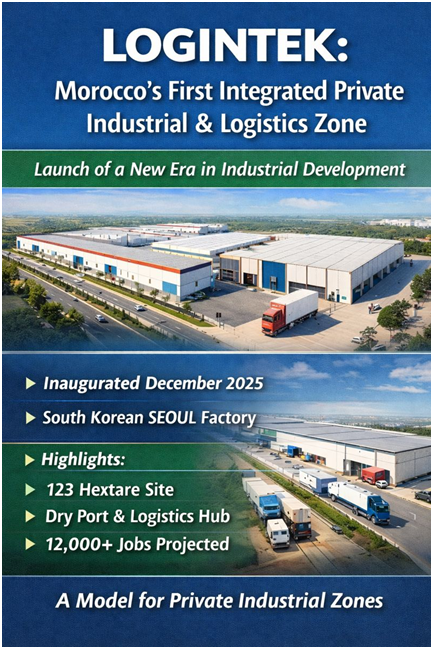
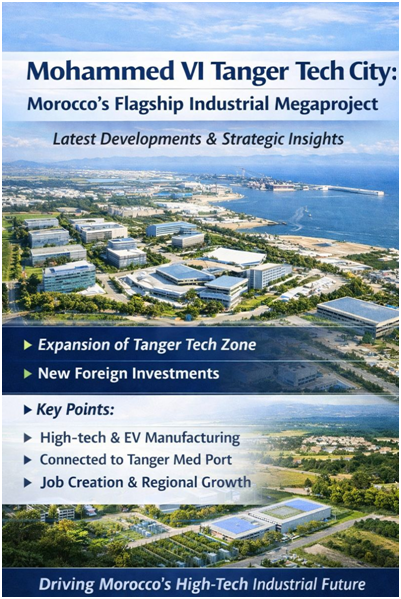
From flagship megaprojects like Tanger Tech to innovative private platforms like Logintek, and from newly created acceleration zones to a nationwide push for greener industrial development, the Kingdom is positioning itself as a leading industrial hub in Africa and the Mediterranean.
The success of these developments will hinge on continued investment, workforce readiness, and a sharp focus on quality and sustainability — all central to Morocco’s economic future.