All About Free Zones
Morocco’s Free Zones represent one of the country’s most powerful tools for attracting international investment, boosting exports, and accelerating industrial growth. These zones are designated economic areas where businesses benefit from a highly competitive regulatory, fiscal, and operational environment designed to simplify trade and enhance global competitiveness.
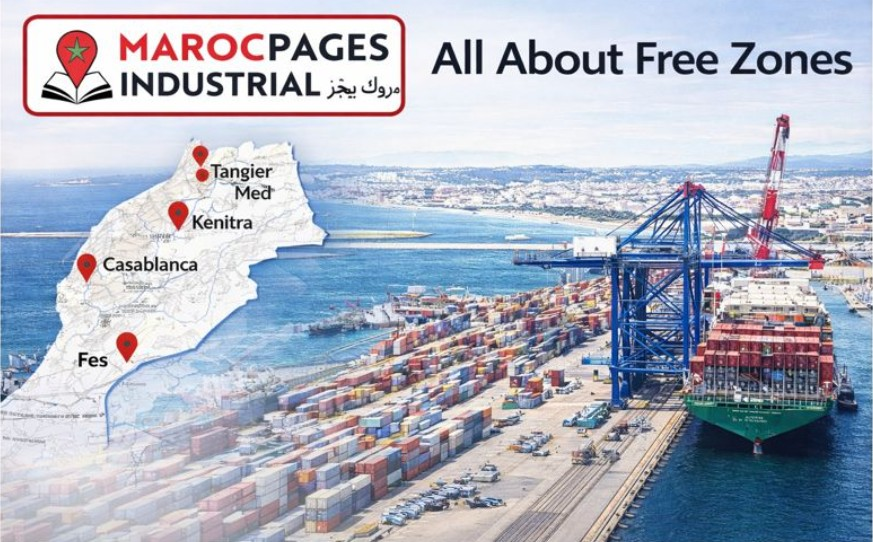
Strategically located near major ports, airports, and logistics corridors, Morocco’s Free Zones serve as gateways between Africa, Europe, the Middle East, and the Americas. Zones such as Tangier Med Free Zone, Atlantic Free Zone (Kenitra), Midparc (Casablanca), and Fes Shore have become internationally recognised hubs for automotive manufacturing, aeronautics, electronics, logistics, and export-oriented services.
One of the defining features of Free Zones is their export-focused model. Companies operating within these zones are typically oriented toward international markets, benefitting from streamlined customs procedures, reduced administrative barriers, and simplified import-export operations. Goods can be imported, processed, transformed, and re-exported with minimal friction, significantly reducing time-to-market.
Fiscal incentives are another cornerstone of Morocco’s Free Zones. Businesses benefit from corporate tax exemptions or reductions, customs duty exemptions on imported equipment and raw materials, and VAT advantages for export activities. These incentives are designed not only to reduce operating costs but also to create long-term stability and predictability for investors planning large-scale industrial operations.
Beyond tax and customs advantages, Free Zones offer world-class infrastructure. Industrial land is fully serviced with utilities, high-capacity logistics platforms, advanced telecommunications, and proximity to transport hubs. Many zones also provide shared facilities, on-site customs services, and one-stop administrative offices, allowing businesses to focus on production and growth rather than bureaucracy.
Human capital is another key advantage. Morocco has invested heavily in vocational training and industry-specific skills development, ensuring that companies in Free Zones have access to a qualified, cost-competitive workforce. Partnerships with training institutes and universities further support talent development aligned with industry needs.
For international companies seeking a stable, well-connected, and business-friendly environment, Morocco’s Free Zones offer a compelling value proposition. Through Maroc Pages Industrial, businesses can explore, compare, and connect with companies operating in Free Zones across the country, gaining visibility into Morocco’s export-driven industrial ecosystem.